The West Coast, a salmon fishing tragedy experienced at first hand!
For several years now it has been widely known that salmon fish farming has had and continues to have a devastating impact on Scotland’s wild salmon stocks. It is no coincidence that the largest concentration of fish farms are located along the West Coast of Scotland and it is in precisely this area that there has been the biggest drop in catches of rod caught salmon and Sea trout. Indeed, the vast majority of rivers on the west coast are now rated as being category three rivers which means that they have to operate a mandatory catch and release policy on all rod caught salmon. This is because they are deemed to have unsustainably low stocks of wild fish.
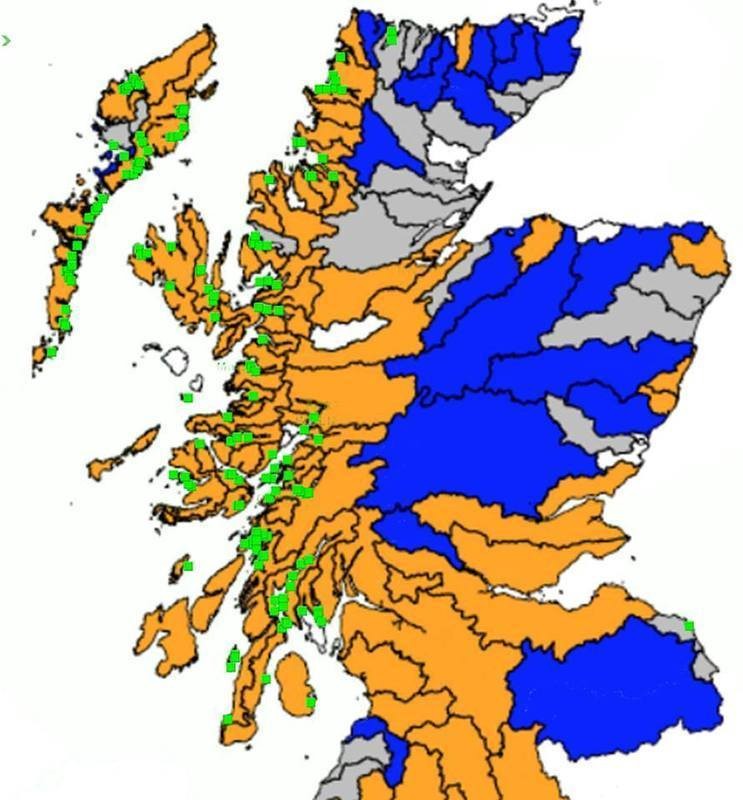
Different catogeries of river in Scotland. Blue- Cat 1, Grey- Cat 2, Yellow- Cat 3. Green depicts fish farms
The problem with fish farms is twofold. Firstly, fish farms are located very close to the shoreline and often near to the mouth of salmon rivers. These farms are a breeding ground for sea lice. The fish that are in the cages act like magnets hosting the sea lice parasite. When the juvenile smolts leave the river and go out to sea to start their migration, they have no option but to make their perilous journey close to the hundreds of fish farms dotted around the coastline. It is during this time that they become infested with lice. To an adult fish, sea lice is not so much of a problem as it much stronger and more robust but to juveniles the parasite is deadly, producing large lesions across the length of the fish, leading to a slow and painful death.
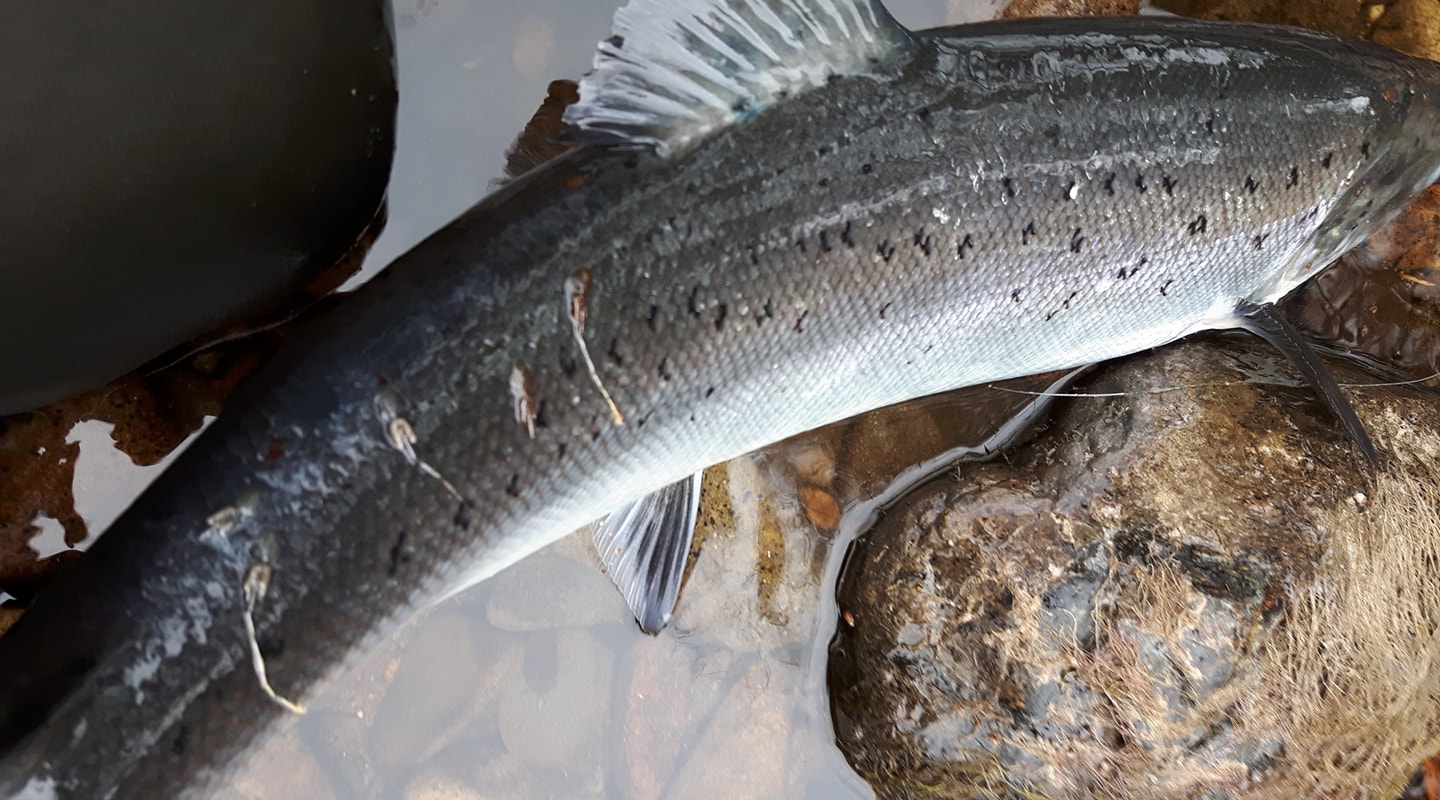
Sea lice kills juvenile fish
Unfortunately, the sea lice are not the only problem with salmon farms. The wide variety chemicals used when treating and feeding the farmed fish are also becoming a big problem. These are obviously being released into the water and again this is affecting both the mature and juvenile fish detrimentally. The plan is for more fish farms on the west coast to be erected as the government feels that this is a great way of bringing revenue to the country. So, unfortunately the problem is set to get worse and not better.
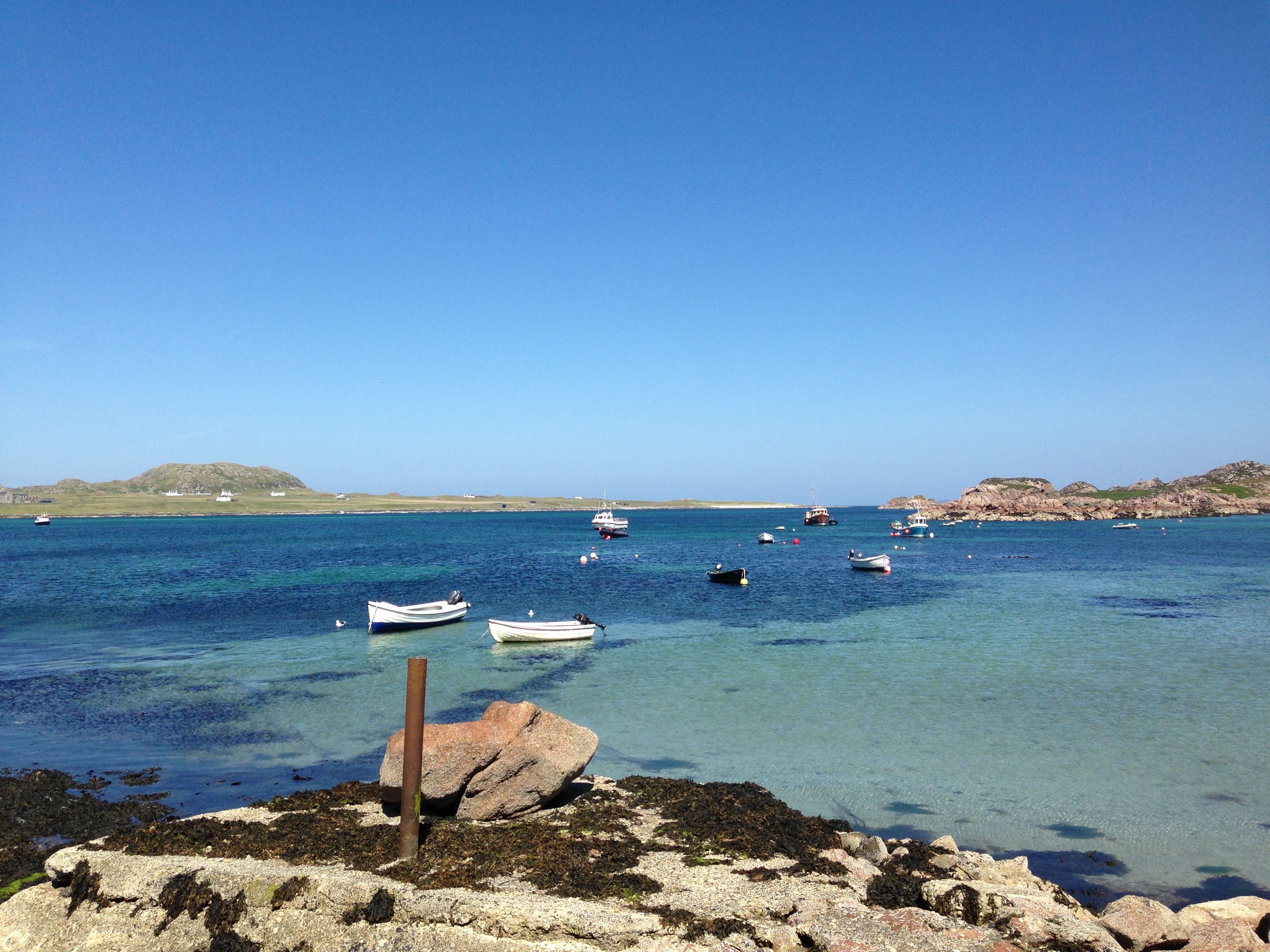
The West Coast of Scotland is a beautiful place to visit
Recently my husband and I had a short break on the West Coast of Scotland and were also lucky enough to fish for a day on what was once a premier fishing estate. What we witnessed during our time on the west coast was tragic and will be firmly etched in our memory for years to come.
We were going to be staying on the Mull of Kintyre for a few days and were looking forward to our trip immensely. We had arranged to go salmon fishing on an estate which was located on one of the Hebridean Islands on our last day. We drove along the scenic A83 between Inveraray and Lochgilphead, as we headed towards our cottage on the first day of our holiday. The scenery was beautiful, with dramatic high mountains all around us dropping quickly into the sea. The coastline was truly spectacular. When you combined this with the deserted golden sandy beaches, it felt like we were in heaven. Everything was perfect and our surroundings, as we drove along the coast, made us feel proud to be Scottish. That was everything apart from one ugly sight that greeted us every few miles along the coastline. That was, of course, the hundreds of salmon cages which blotted the landscape. Unfortunately, they were everywhere and in vast numbers. The worrying thing was that they were so close to the coast. Often, while driving, we would cross a nice burn or small stream which you would think would be an ideal habitat for Sea trout to spawn. These burns would be flowing directly into the sea just meters away from where the great big black cages of the fish farms loomed. The juvenile fish would not stand a chance. We stopped at a layby close to where one of the fish farms were located. The smells emanating from the farm were dreadful and intoxicating. The air reeked of chemicals which stung the back of your throat. These were the same chemicals that were going into the water and being used to treat the salmon on the fish farms.
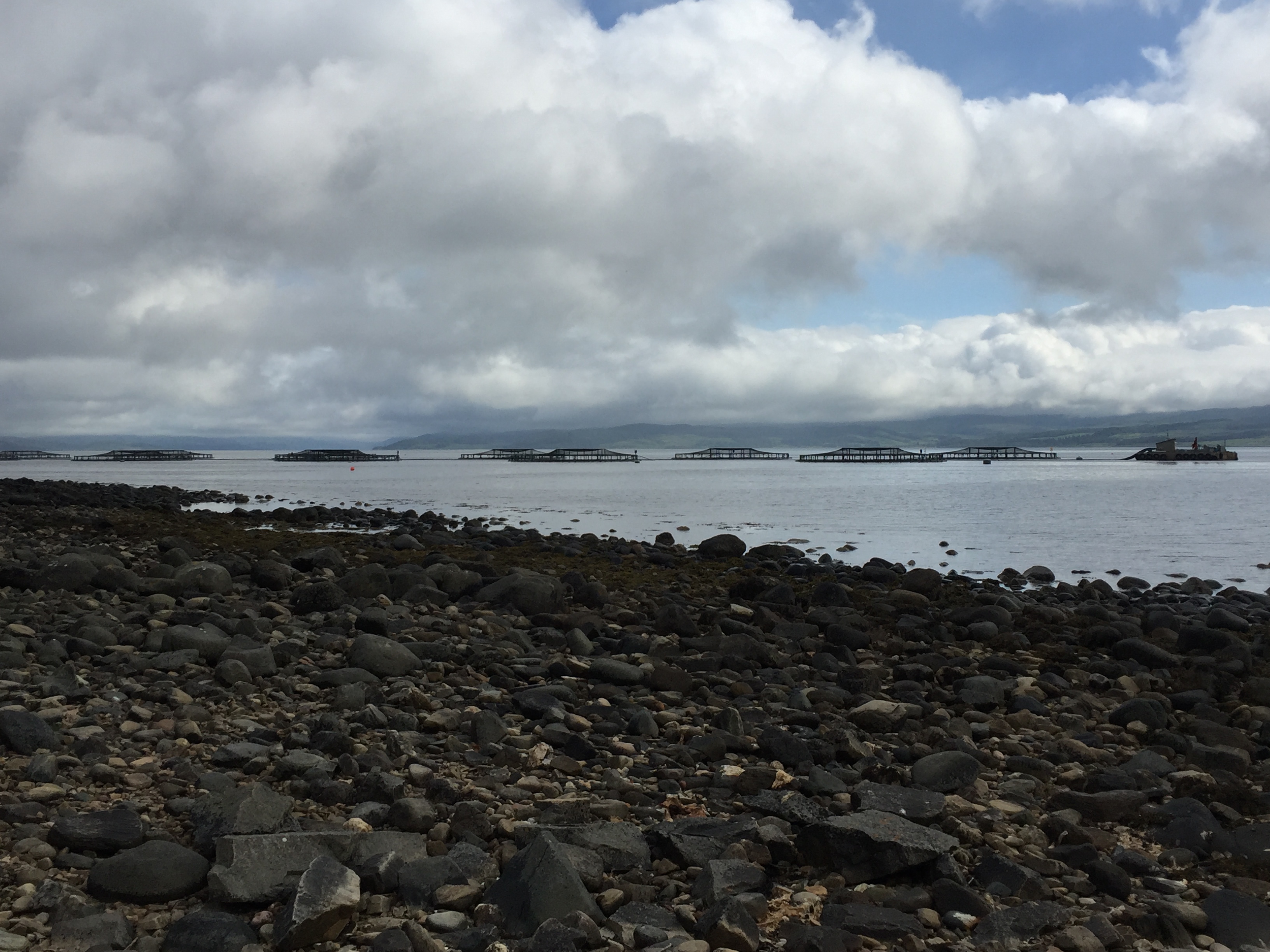
The dreaded fish farms located so close to the shore
Over the next couple of days we had wonderful walks along the coast and enjoyed the deserted white sandy beaches but around every corner, there were more fish farms. We were lucky enough to be staying in a cottage high up on a hill. It boasted fantastic views over towards the Island of Ghia. Even from our cottage, we could see fish farms dotted around the island. The fish farms were like parasites slowly spreading around the coast.
On the last day of our holiday, we had arranged to fish a river system on one of the islands. Our journey in the morning to the fishing destination involved a ferry crossing. We arrived at the delightful estate to be greeted by the owner. What a majestic place it was. The small intimate river ran close to the family home and looked mouth-watering. We had permission to fish the entire river as well as the loch which was located at the head of the river system. The owner kindly took us up to the loch which entailed around a four-mile drive on a rough dirt track road alongside the river. The river was beautiful. We were lucky that there had been some rain a few days prior, so conditions were perfect. Every pool looked like it could hold a fish. The river could be comfortably covered with a single-handed rod and there were lovely walkways and bridges built for anglers to cross over. You could see that the place was well looked after. As we drove up the valley, we were struck by how dramatic a place this was. We also saw a fantastic hatchery on the estate which looked in great working order but appeared to be redundant. We finally got to the loch and were pleasantly surprised. The loch was set between to large mountains. There was an excellent boat and boathouse and the scenery was to die for.
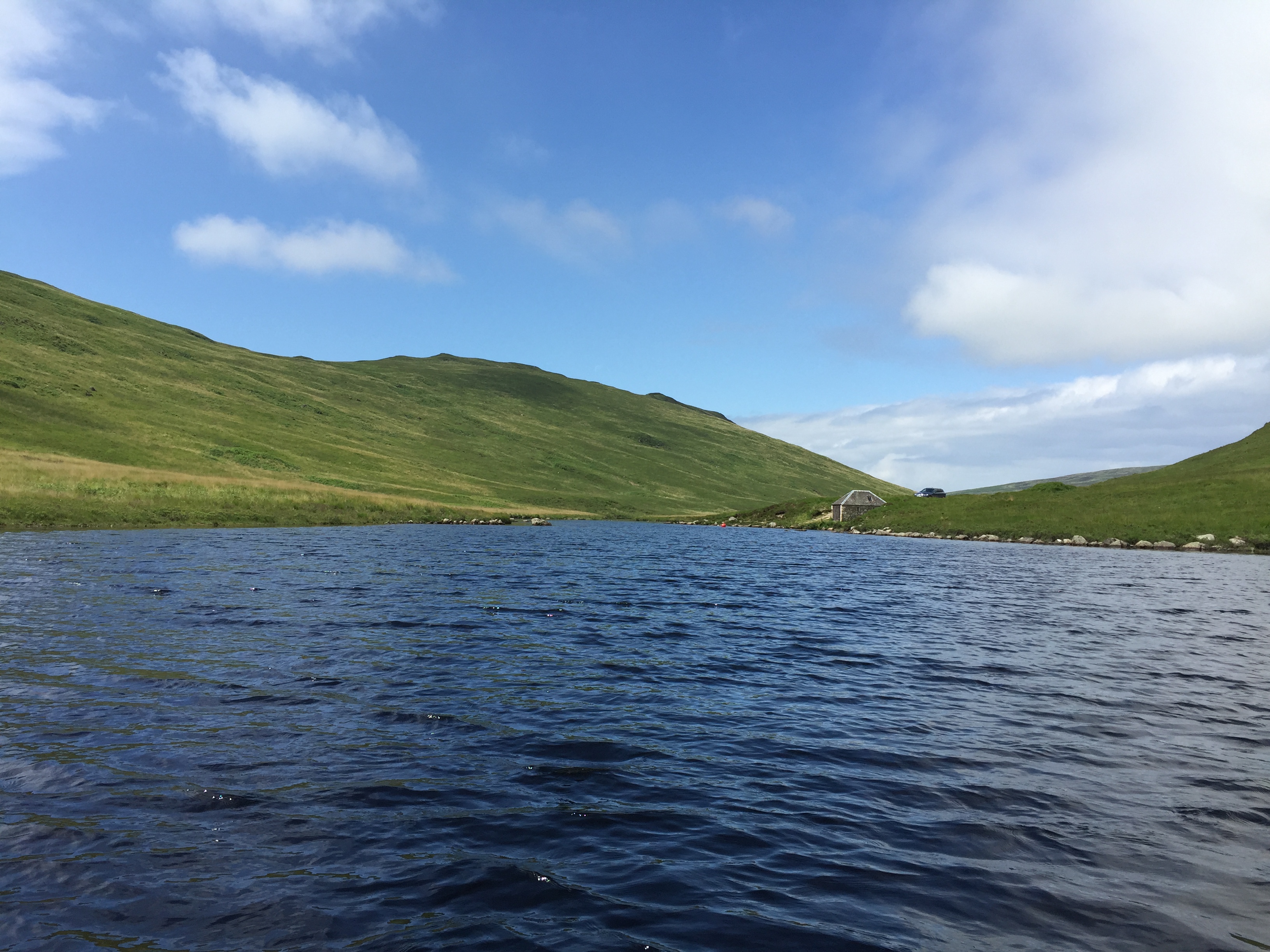
The beautiful loch on the estate which was once a haven for salmon and Sea trout
It was nice to chat with the owner but what he had to say left us with a sinking feeling which went to the bottom of our hearts. The estate had been in the family for generations and at one time was a thriving salmon and Sea trout fishery. Anglers from all over the world would come to fish on the river and loch for Sea trout and salmon from June onwards. Indeed, it was so prolific that from July onwards the fishing would be fully booked. Looking at the loch and the adjoining river you could see why. Where better to enjoy a week’s salmon fishing than in the midst of some of the most spectacular scenery on a remote Scottish Island? Through the late 90’s catches dropped significantly. The small loch which was once full of salmon, grilse and Sea trout every year was becoming less well populated and catches on the river, nose-dived. This coincided with a rise in salmon farming on the west coast. The owner built a hatchery on the estate to see if this would help halt the decline of the wild salmon stocks. Unfortunately, this had very little effect as the number of fish caught continued to decline at an alarming rate. Shortly afterwards, the owner became resigned to the fact that he was fighting a losing battle and so closed the hatchery.
Nowadays, the river is hardly fished and there are just a handful of salmon and Sea trout caught each season. Unfortunately, this estate is a one of several that have experienced a similar fate in the area in recent years.
Sandy and I enjoyed a wonderful day fishing both the loch and the river. The loch was small and a drift would take no more than half an hour. You could just imagine what the fishing would have been like in its hay day. Unsurprisingly, we only managed a few very small Brown trout.
The river was great fun to fish. While fishing every pool, you expected the line to tighten. Each pool had its own unique character and some of the pools needed no more than a flick to cover them. We had perfect conditions, as there was good cloud cover overhead and decent water. By late afternoon we got the feeling that there was very few fish in the system. Neither of us had seen a fish let alone got a pull. So, there it was, a wonderful day’s fishing on the west coast, on a beautiful estate, in beautiful surroundings but no fish.
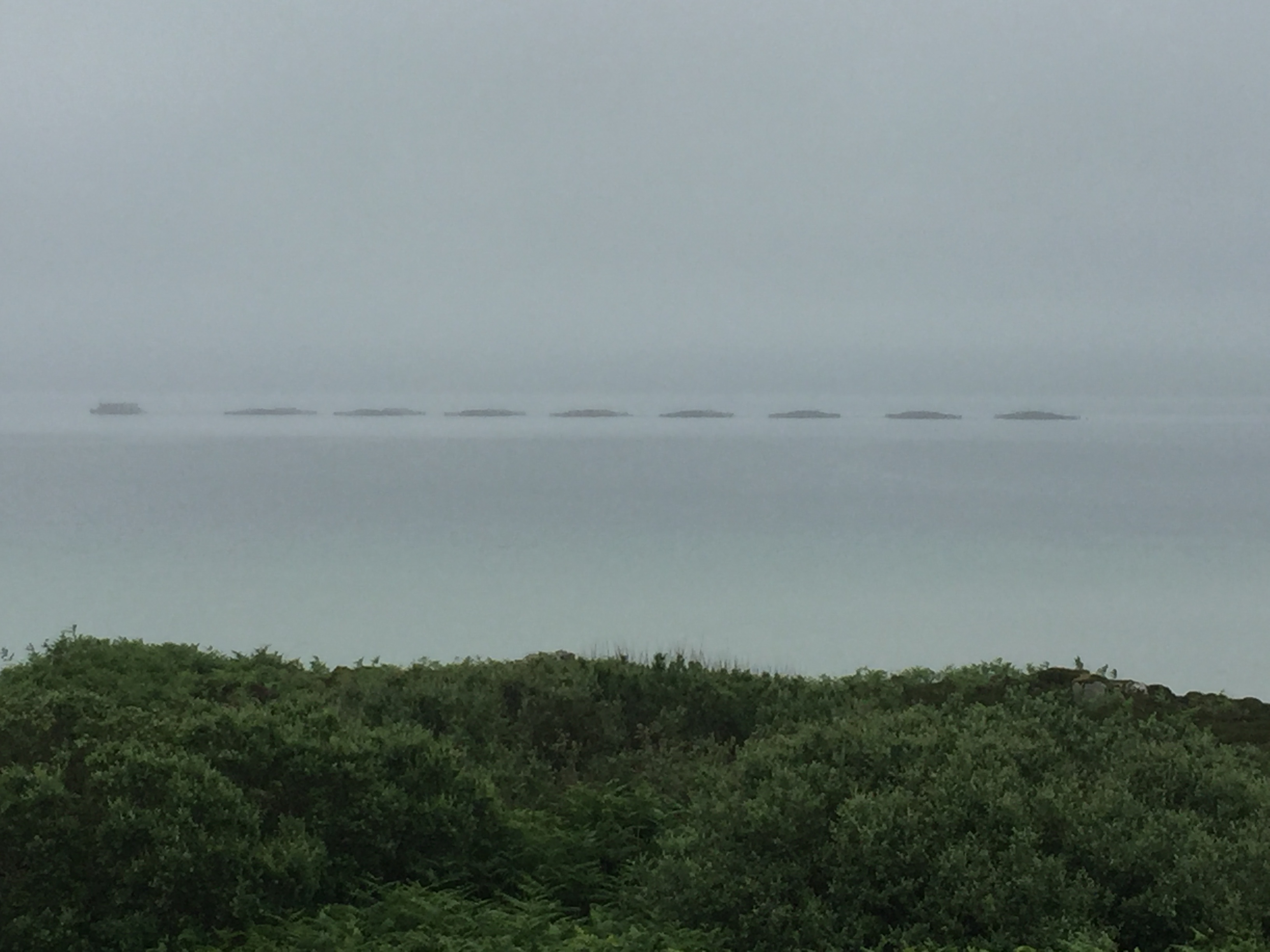
Fish farms located in the Sound of Ghia
As we got the ferry back to the mainland that evening, we could see the dark markings of more fish farms along the coast. After experiencing the salmon fishing at first hand and listening to the sad story of the owner on the estate, it now felt as if it was an even more disturbing sight. That evening we were chatting to some locals in a restaurant and they said that the government had plans to erect more fish farms in the area in the next few years, as the industry had brought so much money to the Scottish economy. This was so sad to hear and so short sighted, as a wild salmon caught on rod and line brings infinitely more money to the Scottish economy compared to farmed salmon.
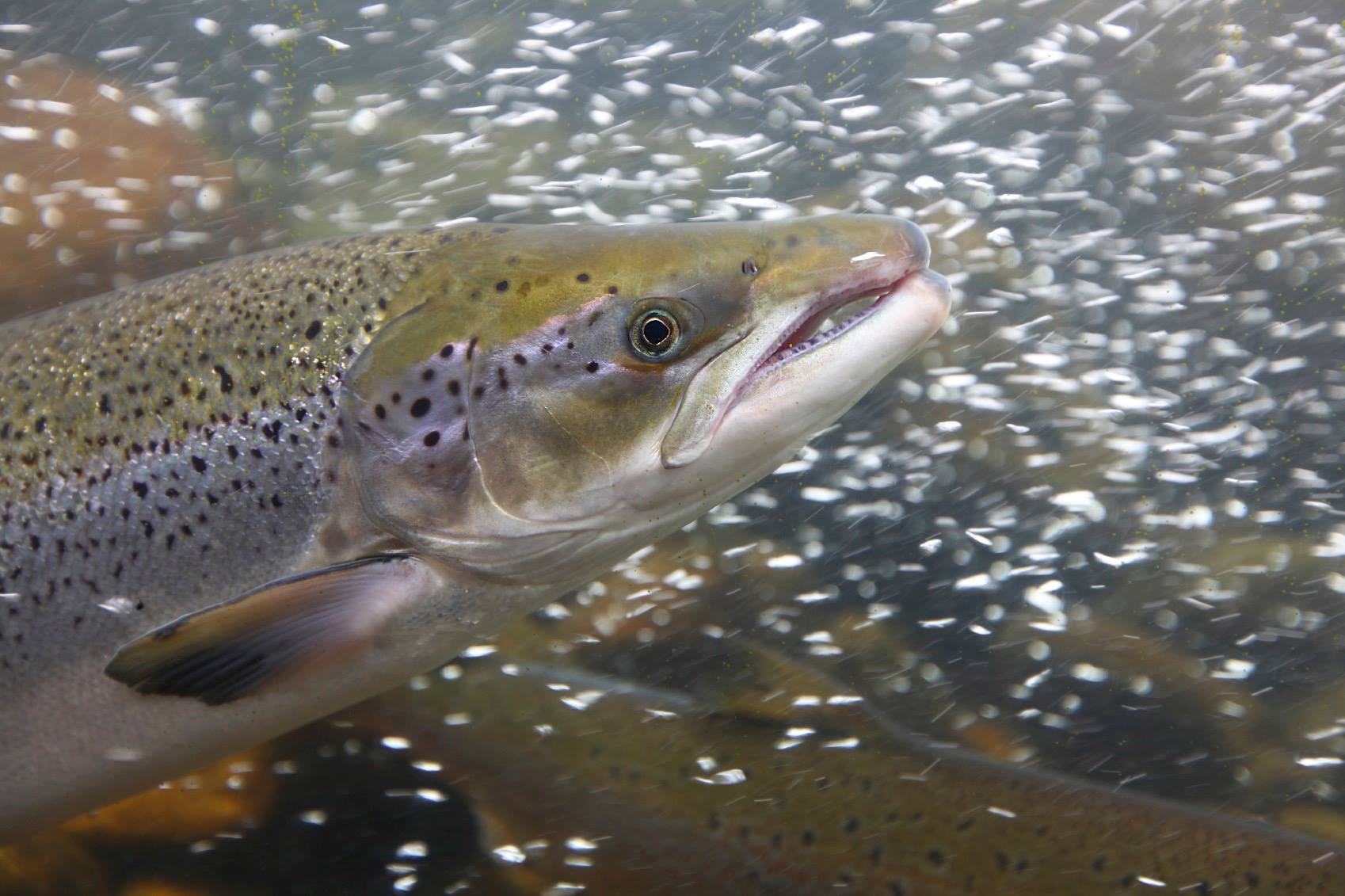
We need to protect our wild stocks of salmon
We had a fantastic short break on the west coast. Unfortunately, our time was tinged with sadness as we saw the vast number of salmon farms around the coast and knowing what impact they were having on wild fish numbers. It was also heart breaking to hear at first hand from the owner of an estate that had once experienced the glory days of the salmon and Sea trout fishing but through time and despite his best efforts, had been unable to the halt the decline of wild fish numbers on his own river. You could not dream of fishing on a more beautiful river and loch but sadly if there are few fish around the wonderful setting quickly pales into insignificance. The worrying fact is that there is set to be an expansion of the salmon farming programme in the area. Until the salmon farming industry is more tightly regulated and controlled on the West Coast of Scotland, the runs of wild salmon and Sea trout will continue to be decimated and they will inevitable slide to dangerously low numbers.